AviFly
AviFly
  • HHooww  IItt  WWoorrkkss
  • AAbboouutt  AAvviiFFllyy
  • CCoonnttaacctt
DDoowwnnllooaadd  aapppp
AviFly

Your rights

  • How to claim (guide)
  • Cancelled flight claim
  • Delayed flight claim
  • Denied boarding
  • Missed flight connection
  • Lost luggage on flights
  • Flight compensation
  • Passenger rights
  • Verify compensation
  • EU261 Calculator
  • Claim companies comparison
  • EU261 Regulation
  • Montreal Convention 1999
  • Airlines

Socials

  • Instagram
  • Facebook
  • LinkedIn

Legal

  • Privacy policy
  • Terms and conditions
  • Cookies
  • Legal notice
  • Referral programme

Company

  • About AviFly
  • Blog
  • Contact
  • FAQs

© 2026 AviFly Technologies SL. All rights reserved.

Carrer de la Llotja, S/N, 08500 Vic, Barcelona•GDPR Compliant•Protected by reCAPTCHA — Privacy · Terms
INTERNATIONAL REGULATION

Montreal Convention 1999:
Global passenger protection

If your flight is not covered by EU261 Regulation, the Montreal Convention allows you to claim equivalent compensation of €250 to €600 on international flights outside the European Union.

€7,700
Delay limit
137+
Signatory countries
2 years
Claim period
Check my compensation for freeRead the convention
Convenio de Montreal 1999 - Derechos de los pasajeros aéreos internacionales

What is the Montreal Convention?

If your flight is not covered by Regulation (EC) 261/2004, it doesn't mean you lose your right to compensation. In many cases, it's possible to claim the same compensation of €250, €400 or €600 under the Montreal Convention, through an analogical application of European regulations.

Article 19 of this Convention establishes that the airline is liable for damages caused by delays, and thanks to consolidated interpretation —inspired by the criteria of the Court of Justice of the EU—, today it's possible to claim compensation equivalent to EU261 even on flights outside the European Union, such as routes between third countries or flights operated by non-EU airlines.

ARTICLE 22 MONTREAL CONVENTION 1999

Compensation limits

Limits are expressed in Special Drawing Rights (SDR), updated in 2024/25

~€7,700

Passenger delay

Material and moral damages for delay

6,303 SDR
~€1,860

Checked baggage

Loss, damage or delay of baggage

1,519 SDR
~€185,000

Injury/death

Up to 100,000 SDR without exoneration limit

151,880 SDR

Important

Unlike EU261, the Montreal Convention does not offer automatic compensation. The passenger must prove the damage suffered. However, if your flight arrived more than 3 hours late, you may be entitled to the same compensation you would receive under European regulations.

MONTREAL CONVENTION 1999

Key Articles of the Montreal Convention

The six articles that define your rights on international flights: liability, limits and deadlines

Article 17 — Death and Injury of Passengers

The airline is liable for damage sustained in the event of death or bodily injury of a passenger, provided that the accident causing the death or injury took place on board the aircraft or in the course of embarking or disembarking. Liability is objective up to 128,821 SDR (~€157,500): the airline cannot exonerate itself by proving absence of fault. Above that threshold, it may demonstrate that it exercised all due diligence.
Article 18 — Damage to Checked Baggage

The carrier is liable for damage sustained in the event of destruction, loss, damage or delay to checked baggage, during the period in which the baggage is under the carrier's charge. The liability limit is 1,519 SDR (~€1,860) per passenger. It does not apply if the damage results from an inherent defect, quality or vice of the baggage. Carry-on baggage is only covered if carrier fault or negligence can be proved.

Article 19 — Delay

The carrier is liable for damage occasioned by delay in the carriage by air of passengers, baggage or cargo. The carrier is not liable, however, if it proves that it and its servants or agents took all measures that could reasonably be required to avoid the damage, or that it was impossible for it to take such measures. The limit is 6,694 SDR (~€8,200) per passenger. This article is the legal basis for claiming EU261-equivalent compensation on international routes.

Article 22 — SDR Liability Limits

Establishes maximum compensation caps: 128,821 SDR for death or personal injury, 1,519 SDR for baggage damage and 6,694 SDR for passenger delay. These limits may be exceeded if the carrier acted with intent to cause damage or recklessly with knowledge that damage would probably result. SDR amounts are updated every five years by the IMF and published in the EU Official Journal.

Article 31 — Notice Deadlines for Baggage Damage

To claim for baggage damage, you must notify the airline in writing within: 7 days of receiving damaged baggage, and 21 days from the date when delayed baggage should have been delivered. Failure to notify within these deadlines forfeits your right to claim. Notification can be made at the airport using the PIR form.

Article 35 — Limitation of Actions

The right to claim is extinguished if an action is not brought within a period of two years, reckoned from the date of arrival at the destination, or from the date on which the aircraft ought to have arrived, or from the date on which the carriage stopped. This is an absolute deadline: it is not interrupted or suspended for any reason, not even ongoing negotiations with the airline.

BAGGAGE ON INTERNATIONAL FLIGHTS

Lost, damaged or delayed baggage: how to claim step by step

The most comprehensive guide to baggage claims under the Montreal Convention: PIR, deadlines and required documentation

The PIR: what it is and why it's essential

The PIR (Property Irregularity Report) is the official document you must request at the airport's baggage service desk before leaving. Without a PIR, you will practically lose any subsequent claim. If your suitcase doesn't appear on the belt, arrives damaged or has any irregularity, go directly to your airline's counter or the airport's baggage management desk and insist on a PIR form. Always keep your baggage receipt (boarding pass and baggage tag) and photograph any visible damage. The PIR is your main evidence with the airline and, if it goes to court, before the tribunal.

Special, sports and high-value declared baggage

The standard limit of 1,519 SDR (~€1,860) may be insufficient if you travel with high-end sports equipment (skis, bicycles, golf clubs) or high-value items. The Montreal Convention (Art. 22.2) allows you to make a special declaration of interest at check-in and pay an additional fee, which raises the liability limit to the declared amount. If you didn't make a special declaration and your suitcase contained valuable items (jewellery, photographic equipment, computers), you can only claim up to the standard limit. Remember that airlines routinely exclude fragile items, electronics and perishable items checked without adequate packaging.

Checked baggage vs. carry-on baggage

The Montreal Convention protects each type of baggage differently. Checked baggage is fully covered by articles 17 and 18: objective liability up to 1,519 SDR, regardless of whether the airline was at fault. Carry-on baggage is only covered if fault or negligence of the airline or its employees can be demonstrated. If you deposit your carry-on in the overhead compartment and it is damaged or lost by the airline when forced to check it at the gate, it is then treated as checked baggage and the same rules apply. Always keep the receipt when the airline forces you to check your cabin baggage.

ARTICLE 1 MONTREAL CONVENTION 1999

When does the Montreal Convention apply?

The Convention applies to international air transport between signatory states

Covered flights

  • International flights between two signatory countries
  • Flights with stopovers in a third country (if origin and destination are signatories)
  • Flights operated by non-European airlines to/from the EU
  • Routes between third countries (e.g. New York - Buenos Aires)
  • Flights where EU261 does not apply due to non-EU airline

Not covered

  • Domestic flights within a single country (unless international stopover)
  • Postal or mail transport
  • Countries that have not ratified the Convention
  • Flights without remuneration (free)

INTERNATIONAL MONETARY SYSTEM

SDRs: what they are and how they convert to euros

Special Drawing Rights (SDRs) are the artificial monetary unit of the International Monetary Fund (IMF), created in 1969 as an international reserve asset. Their value is calculated daily based on a basket of five currencies: US dollar, euro, British pound, Japanese yen and Chinese yuan. In 2025, approximately 1 SDR equals €1.22, though the rate fluctuates. The Montreal Convention uses SDRs so that compensation limits are uniform worldwide and do not depend on any national currency. Spanish courts convert SDRs to euros using the exchange rate on the day of the judgement.

Situation
SDR Limit
Approx. EUR (2025)
Passenger delay (Art. 19)
6,694 SDR
~€8,200
Lost/damaged baggage (Art. 18)
1,519 SDR
~€1,860
Injury/death (Art. 17)
128,821 SDR
~€157,500

LEGAL DEADLINES

Deadlines to claim under the Montreal Convention

Missing the deadlines can permanently forfeit your right to compensation

Article 31.2
7 days

Damaged or faulty baggage

If your baggage arrived damaged, you have 7 days from receipt to notify the airline in writing. The airport PIR fulfils this function. If you fail to notify within this deadline, you are presumed to have accepted the baggage in good condition and will lose the claim.

Article 31.3
21 days

Delayed baggage

If your suitcase arrived late, you have 21 days from when you received it to claim in writing for expenses arising from the delay (clothing, essential items). Keep all receipts. After 21 days without notification, the right to claim for delayed baggage is forfeited.

Article 35
2 years

General limitation (flight, injuries, lost baggage)

For any claim under the Montreal Convention — flight delay, injuries, definitively lost baggage — you have 2 years from the scheduled arrival date to initiate legal action. It is an absolute limitation period: it is not interrupted or suspended for any reason, not even by prior negotiations with the airline.

AIR REGULATION COMPARISON

Montreal Convention vs EU261 Regulation

Comparison of both regulations so you know your options

Aspect
Montreal Convention
EU261 Regulation
Geographic scope
International (137+ signatory countries)
EU flights or from EU with European airline
Type of compensation
Compensation for proven damage (up to SDR limit)
Fixed automatic compensation (€250-600)
Minimum delay
No fixed threshold (>3h by analogy)
≥3 hours delay at destination
Mandatory assistance
Not expressly provided
Yes (food, accommodation, transport)
Claim period
2 years from scheduled arrival
2-5 years depending on country
Proof of damage
Passenger must prove the damage
No damage proof required

CONVENTION LIMITATIONS

What the Montreal Convention does NOT cover

Know the excluded situations to avoid initiating claims without a legal basis

Purely domestic flights

The Convention only applies to international air transport. A flight within a single country is not covered, unless it forms part of an international itinerary with a connecting flight.

Non-signatory countries

If the country of origin or destination has not ratified the Montreal Convention, you cannot invoke it. Check the updated list of 137+ state parties before claiming. Some countries have only ratified the older Warsaw Convention of 1929.

Postal transport and cargo without passengers

The Convention distinguishes between passenger transport and cargo transport. The passenger rights of articles 17-19 do not apply to postal shipments or pure cargo transport contracts.

Flights without remuneration or economic consideration

Journeys made completely free of charge — without a commercial ticket or paid transport agreement — fall outside the scope of the Convention. This includes certain humanitarian and rescue operations.

Damage caused by the baggage's own defect

The airline is not liable if damage to baggage is a direct consequence of an inherent defect of the baggage itself (inadequate packaging, fragile contents without sufficient protection, corrosive materials). It must be established that the damage originated from the airline's failure, not from the baggage itself.

PROVEN EXPERIENCE AND RESULTS

AviFly: specialists in international air law

Our legal team combines the application of EU261 Regulation with the Montreal Convention to maximise your compensation. We handle extrajudicial claims for just 15% + VAT on what is recovered, and court litigation for 30% + VAT. No recovery, no fees.

EU261

European regulation specialists

15%

Europe's lowest commission

100%

Digital process — no paperwork

HOW IT WORKS

Three steps. Zero paperwork.

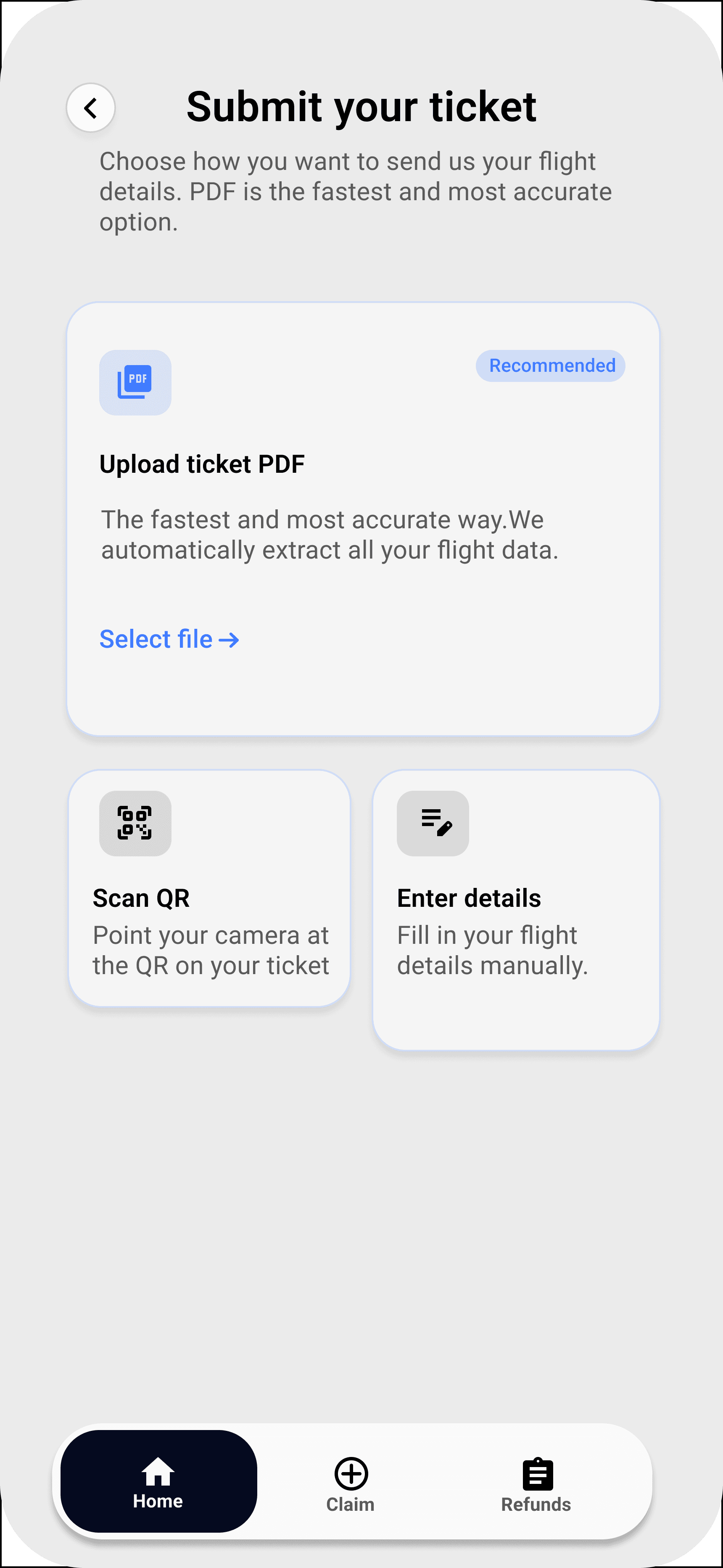
Upload your ticket
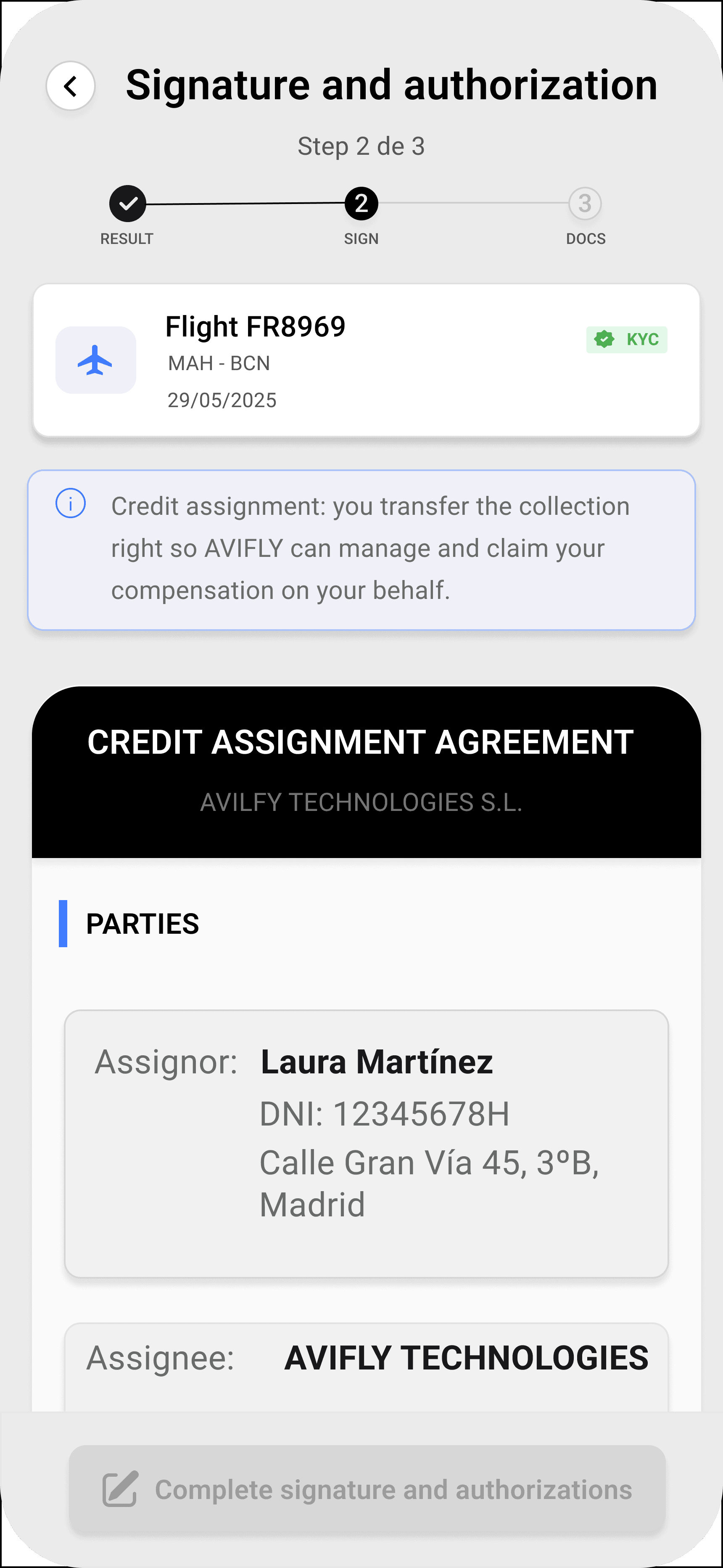
Digital signature
Get paid
Check my flight now
Convenio de Montreal 1999

Did your international flight have problems?

We analyse for free whether your flight is covered by the Montreal Convention or EU261 Regulation and claim on your behalf.

Check my compensation for free
No upfront costOnly 15% + VAT if we win

FREQUENTLY ASKED QUESTIONS

Frequently asked questions about the Montreal Convention

We answer your most common questions

Official AviFly app

Smart claim managementfor your trip

Track incidents, refunds and claims in one seamless app.

App preview on mobile
DownloadApp StoreDownloadPlay Store
Explore the app
AviFly mobile app